Understanding joint flexibility
Joint flexibility refers to the range of motion available at a specific joint — the degree to which the articulating bones can move relative to each other without producing discomfort or mechanical restriction. Mobility is the related but distinct capacity to actively move through that available range of motion with control and coordination. A person can have good passive flexibility (their joint can be moved through a full range by an external force) but poor active mobility (they lack the muscular strength and neural control to move through that range themselves).
For daily life quality, active mobility matters more than passive flexibility: it determines whether you can sit, rise, walk, reach, carry, and perform all the activities that make independent living meaningful. Joint flexibility and mobility decline from a combination of cartilage changes, synovial fluid changes, connective tissue stiffening, and muscular strength reduction — all of which have evidence-based interventions that can slow their progression.
Movement for joint health
Counterintuitively, regular appropriate movement is one of the most important interventions for joint health rather than a risk to it. Cartilage has no direct blood supply and receives nutrition exclusively through joint loading and unloading during movement — compressing the cartilage drives out metabolic waste products, and relaxing allows nutrient-rich synovial fluid to flow back in. Sedentary joints literally receive less nutrition than active ones, at the tissue level.
The movement types with the best evidence for joint health are those that load joints through a full range of motion without excessive peak impact: swimming and water-based exercise (near-zero impact), cycling (low impact through hip, knee, and ankle), walking on varied terrain (gentle load cycling), yoga and tai chi (combining flexibility, balance, and strength), and resistance training with controlled technique. Strength training deserves particular attention — the muscles surrounding a joint absorb mechanical load that would otherwise fall entirely on cartilage. Stronger muscles protect cartilage by reducing peak contact stress with every step and movement.
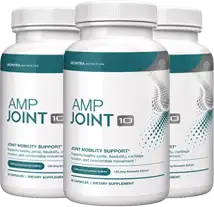
View the AMP Joint 10 formula, current pricing and the 60-day guarantee.
🧠 View AMP Joint 10Hydration and nutrition
Synovial fluid is predominantly water, and its viscosity and volume are meaningfully affected by systemic hydration status. Adequate daily water intake — typically 2-3 litres for active adults, more in hot environments or with exercise — is a simple, zero-cost joint health intervention that is consistently underestimated. Dehydration reduces synovial fluid volume and viscosity, increasing joint friction and reducing the cushioning that joints need during loaded activities.
Anti-inflammatory dietary patterns consistently correlate with better joint health outcomes in epidemiological research. The Mediterranean dietary pattern — emphasising olive oil (oleocanthal, a natural COX inhibitor), oily fish (EPA and DHA omega-3 fatty acids), vegetables and fruits (diverse polyphenols), and legumes — reduces systemic inflammatory markers in published clinical trials. Reducing ultra-processed foods, refined sugars, and trans fats reduces the dietary pro-inflammatory load that exacerbates joint inflammation. Vitamin D and calcium support bone health beneath cartilage surfaces; vitamin C is essential for collagen synthesis.
Warmup and recovery habits
Joint flexibility is consistently greater in warm, active tissue than in cool, rested tissue. Morning stiffness — one of the most commonly reported joint health complaints — reflects the combination of overnight synovial fluid redistribution and lower tissue temperature after sleep. A simple 5-10 minute gentle warmup before demanding activities — consisting of slow, progressively larger joint rotations and light movement — reduces mechanical stress on cold, stiff cartilage surfaces and primes the joint for load-bearing without the micro-injury risk associated with sudden heavy exertion on unprepared tissue.
Recovery habits after demanding activity are equally important. Cold exposure (ice or cold water) reduces acute post-activity joint swelling. Gentle stretching and movement within a comfortable range after activity maintains the synovial fluid circulation that removes metabolic waste products. Sleep — during which growth hormone levels are highest — is the primary period for tissue repair, including cartilage maintenance by chondrocytes. Prioritising sleep quality directly supports joint tissue maintenance in ways that no waking activity can substitute for.
Where daily supplementation fits
AMP Joint 10’s 10-ingredient daily formula provides nutritional support for joint health dimensions that movement, diet, and hydration cannot fully address. Glucosamine, Chondroitin, and Collagen Type II provide substrate and structural support for cartilage maintenance at concentrations that typical dietary intake does not achieve. Hyaluronic Acid directly supports synovial fluid quality. The three anti-inflammatory botanicals (Boswellia, Turmeric, White Willow Bark) address chronic joint inflammation through pathways that dietary anti-inflammatory patterns modulate but cannot fully control. MSM supports the connective tissue collagen synthesis that holds joints stable. BioPerine ensures all ingredients are absorbed effectively.
Used alongside the lifestyle strategies above — appropriate movement, anti-inflammatory nutrition, adequate hydration, smart warmup and recovery habits — AMP Joint 10 provides the nutritional foundation that makes the other strategies more effective. Each approach addresses joint health dimensions the others cannot fully reach.
More articles
More on the AMP Joint 10 blog. Official site for pricing and guarantee.